
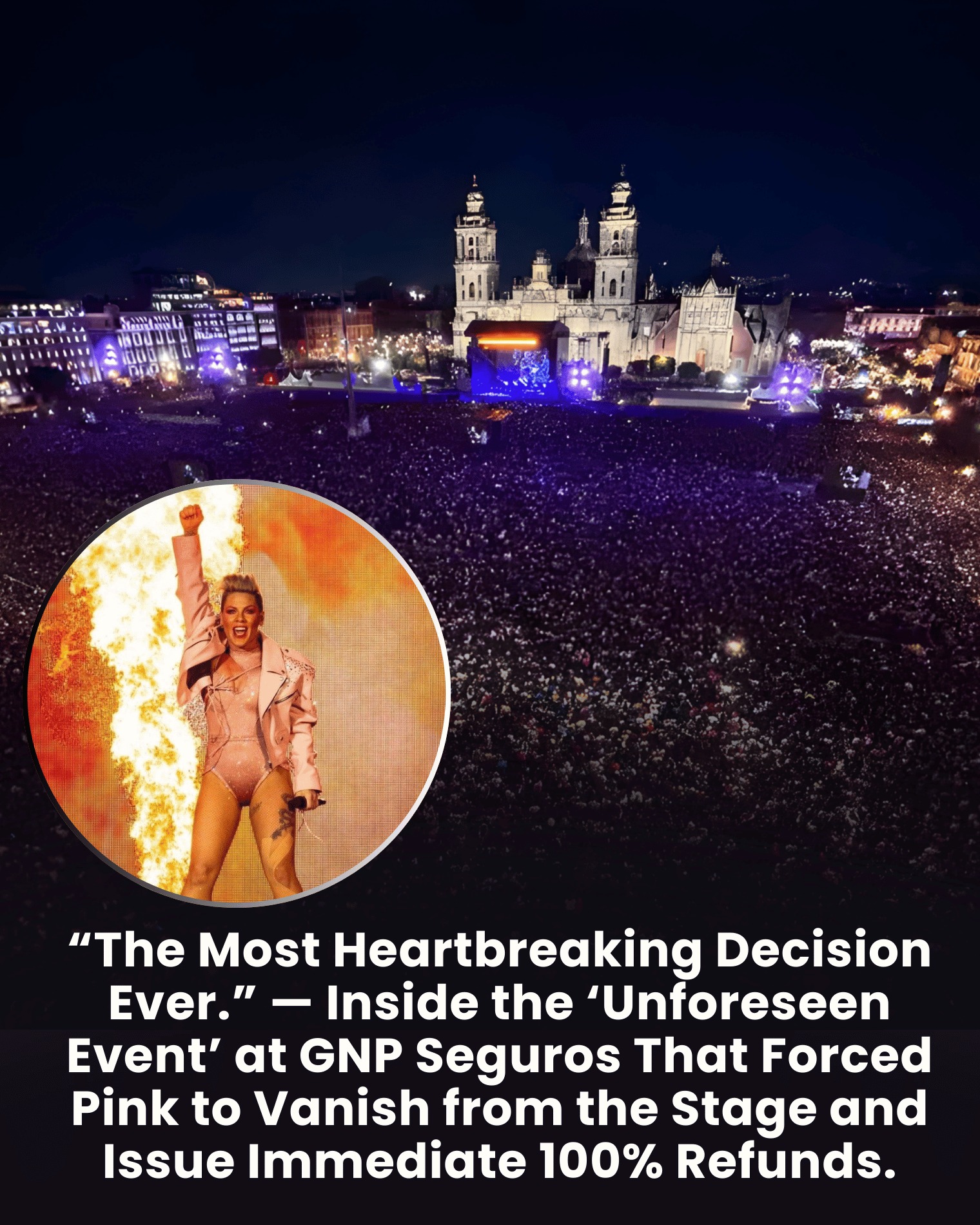
In April 2026, fans in Mexico City were eagerly preparing for what promised to be another unforgettable performance from pop superstar Pink. Known worldwide for her explosive concerts that combine powerful vocals with gravity-defying aerial stunts, her shows have built a reputation for delivering a level of spectacle few artists attempt. However, an unexpected crisis at the GNP Seguros venue forced the singer to make what many insiders later described as "the most heartbreaking decision" of the tour.
For Pink, live performances are not just concerts—they are carefully engineered productions that blend music, acrobatics, choreography, and storytelling. Her signature moments often include flying across arenas suspended by complex rigging systems while continuing to sing live. These breathtaking aerial sequences have become a defining feature of her shows and a major reason why fans travel from around the world to see her perform.
But those same ambitious elements also make her concerts technically demanding. Every show requires specialized equipment, highly trained technicians, and strict safety protocols. According to reports circulating among industry insiders, the Mexico City problem began when a major portion of the aerial rigging equipment failed to arrive at the venue on schedule. Without that crucial infrastructure, the production team could not safely assemble the performance system that Pink relies on during the show.
The situation placed the singer and her team in a difficult position. One option would have been to perform a scaled-down version of the concert without the aerial elements. While many artists might have chosen that route to avoid canceling entirely, Pink reportedly felt that delivering a reduced version of the show would not meet the standard she promises her fans.
For an artist who has built her reputation on pushing the limits of live performance, presenting a show that felt incomplete simply wasn't acceptable.
Ultimately, the decision was made to cancel the performance entirely. The announcement came shortly before the scheduled showtime, sending waves of disappointment through thousands of fans who had gathered at the venue expecting a night of music and spectacle.
Yet what happened next demonstrated why Pink maintains one of the most loyal fan bases in the industry.
Rather than delaying refunds or asking fans to navigate a complicated claims process, her team immediately initiated automatic 100 percent refunds for ticket holders. The swift response ensured that fans would not be financially affected by the cancellation, even though many had traveled long distances to attend the show.
While the crowd's disappointment was undeniable, many fans praised the transparency and professionalism of the response. Social media quickly filled with supportive messages from attendees who expressed understanding of the situation. Many pointed out that safety must always come first—especially when a performance involves complex aerial stunts.
The decision also reinforced something Pink has emphasized throughout her career: her concerts are built around a relationship of trust with her audience. She often refers to her fans as her extended "family," and that bond has shaped how she approaches touring.
Choosing integrity over profit in a high-stakes moment only strengthened that connection. Canceling a major stadium show is never easy, particularly in a city known for its passionate music fans. But by refusing to deliver a performance she felt was below her standard—and by ensuring fans were fully refunded—Pink demonstrated the same commitment that has defined her decades-long career.
In the world of large-scale touring, unexpected technical failures can happen. What matters most is how artists respond when things go wrong. In this case, Pink's decision made one thing clear: protecting the experience and safety of her fans will always matter more than simply going on with the show.